The Offshore Wind MetOcean course provides an in-depth exploration of meteorology and oceanography specific to the offshore wind industry. Participants will acquire a thorough understanding of how wind, waves, currents, and other environmental factors impact offshore wind projects. This knowledge is vital for the successful planning, design, and operation of offshore wind farms.
This course will take place from 10am to 5pm CET.
This course will take place from 10am to 5pm CET.
Prerequisite: We recommend attendees have a technical background. A foundational understanding of basic metocean and/or meteorological principles will help participants gain the full benefit of this course.
Course Learning Objectives
Explain the role of metocean data in offshore wind planning, design, and operations
Interpret key wind, wave, and ocean parameters and assess their impact on turbines, foundations, and marine operations
Describe metocean measurement systems and data quality considerations including sampling, data gaps, and operational constraints
Differentiate between measured and modeled data including key modeling concepts such as assimilation, boundary conditions, and workability
Apply extreme value analysis concepts to evaluate storms, icing, and other environmental risks
Assess emerging technologies and trends in metocean data collection, analysis, and forecasting
Course Completion Certificate
Upon completing at least 50% of the course and achieving a minimum passing score of 50% on a post-course assessment, participants will receive a course certificate valid for three years. This certificate verifies that the essential learning outcomes of the course have been met.
Course Instructor
Sarah McElman
Lead Consultant, Metocean Expert Americas
Sarah McElman is a metocean analyst with a background in spectral wave modeling, computational fluid dynamics, and scale model testing. She is the former metocean lead for Avangrid Renewables and has experience in offshore site assessment for fixed and floating projects in the United States, Europe, and Asia. While at Avangrid, Sarah managed metocean buoy, FLiDAR, and other measurement campaigns across the US and Europe, in addition to leading the metocean dimensions of new business, development, and operational preparedness. Prior to joining Avangrid, Sarah was a computational modeler at Deltares and MARIN.
Guest Speakers
Jon Upton
Director and Metocean Engineer, Coastal and Ocean Surveys Limited
Jon has worked in contractor and operator environments developing skills in metocean measurement delivery for 30 years. He deployed moorings in more than 20 countries during his thirteen years at Fugro, working as an oceanographic engineer and party chief. Working for Shell for almost 20 years, Jon was responsible for the strategy behind metocean campaigns for major projects, spending the last five years working specifically on offshore wind delivery as metocean and site characterization lead. In late 2025, Jon left Shell and set up his own consultancy to continue supporting delivery of safe, high quality metocean campaigns.
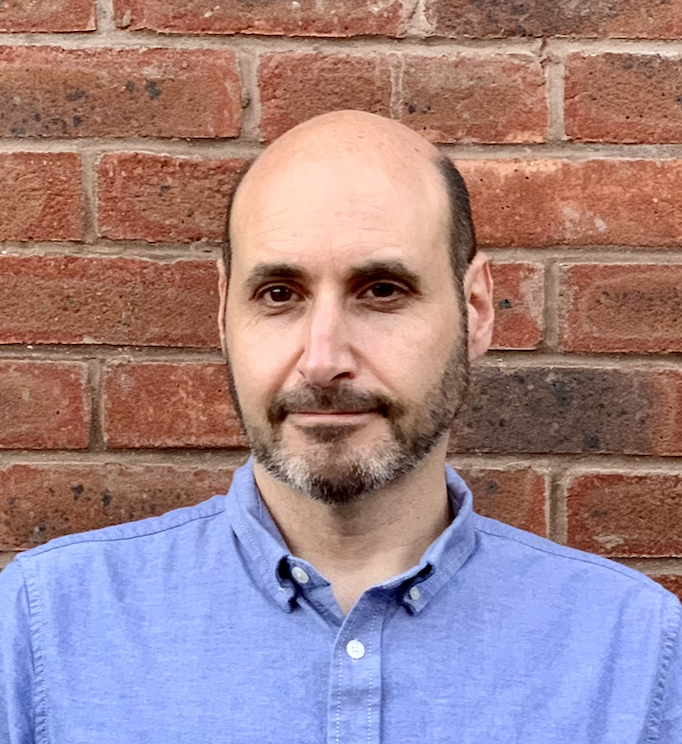
Stephen Redford
Principal Ice and Metocean Specialist, Metoceanology Limited
Stephen brings 25 years of experience supporting offshore energy projects worldwide, spanning arctic, temperate, and equatorial environments. He has worked both as a consultant and within several major energy developers, delivering ice and metocean design criteria, T&I programmes, and O&M optimisation strategies. He currently supports offshore wind developers with metocean input from early-stage pre-bid evaluations through to engineering, operations, and decommissioning across both fixed-bottom and floating wind projects. Stephen is a Chartered Marine Scientist with the Institute of Marine Engineering, Science & Technology (IMarEST).
Panelists

Chan K. Jeong
Senior Metocean & Weather Scientist, Woods Hole Group
Chan Jeong is a seasoned Metocean Engineer with expertise in weather data analysis, offshore wind development, and offshore structure transportation and installation. With a Ph.D. in Ocean Engineering from Texas A&M University, he has developed advanced weather data processing tools and forecasting models to enhance operational decision-making. His career spans roles at Shell, Fugro, and Boskalis. Skilled in machine learning, numerical modeling, and risk management, Chan integrates cutting-edge technology into metocean and marine engineering consultancy.
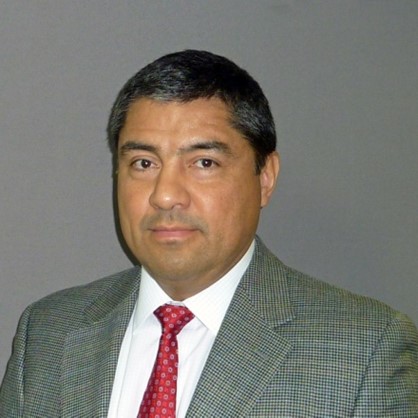
Rafael Ramos
Regional Manager – Senior Oceanographer, Woods Hole Group
Dr. Rafael Ramos has more than 35 years of experience working in many aspects of ocean engineering, oceanography, and atmospheric sciences for government entities and private industry.