Offshore Wind Blade Testing and Inspection Workshop
Price
Duration
$1,250
1-Day
Dates
November 13th, 2025
Format
Course Status
In-Person
WTTC, MA
Open
Need financial assistance? Apply for a scholarship today!
Offshore Wind Blade Testing and Inspection Workshop
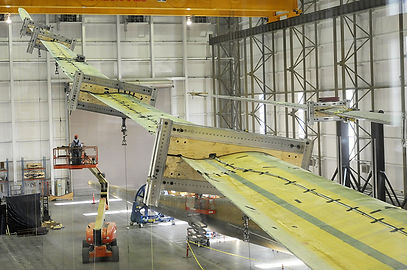
Wind turbine blades are at the heart of offshore wind performance and among the most challenging components to inspect, maintain, and repair. This in-person workshop bridges the gap between operations and maintenance (O&M) and the science of blade testing, giving participants a rare, hands-on opportunity to engage directly with full-scale offshore wind blades at the Wind Technology Testing Center (WTTC) — the only blade testing facility in North America.
Through expert-led sessions and guided tours, participants will gain critical insights into the certification, inspection, and repair practices that keep offshore wind turbines operating safely and efficiently. Beyond the classroom, you’ll experience the sheer scale of utility-scale blades up close, making the challenges of inspection and O&M tangible in a way no textbook or online course can replicate.
Why Attend?
-
See and interact with real offshore wind blades at North America’s premier testing facility.
-
Learn how blade testing connects directly to O&M decisions, from certification standards to repair strategies.
-
Build a practical understanding of inspection methods, common failure modes, and repair options that directly impact asset reliability.
-
Walk away with both a certificate of completion and a deeper appreciation for how blade inspection drives operational decision-making and cost efficiency.
What You’ll Learn:
-
The role of international standards (IEC/IECRE) in ensuring blade safety and performance.
-
Contact and non-contact blade inspection methods (visual, tap testing, IR, ultrasonic, acoustic).
-
Typical inspection findings and what they mean for long-term O&M planning.
-
Repair pathways, from up-tower fixes to full blade replacements.
-
Practical lessons through case studies, interactive sessions, and a guided WTTC tour.
Unique Value:
Unlike any other training, this workshop offers a firsthand look at blades under test—helping participants connect what they learn in theory to the real challenges faced in offshore wind operations and maintenance.
Who Should Attend:
This course is designed for O&M professionals, wind farm operators, maintenance personnel, engineers, inspectors, and industry stakeholders who want to strengthen their technical knowledge of blade reliability and inspection practices. It’s also ideal for anyone eager to gain exclusive access to the WTTC and understand how blade testing informs offshore wind lifecycle management.
Course Objectives:
- Understand the role that blade testing facilities have in the wind industry
- Understand the main certification bodies associated with blades and what role they play
- Be able to explain what IEC 61400 -1, -5, -23 are
- Understand the methods of inspection internal and external
- Name the possible findings and some repair solutions
- Name the repair options (factory/field/up-tower/removal) and the pros/cons of each option
This workshop will be held in person at the Wind Technology Testing Center (WTTC) in Massachusetts from 9 AM to 4 PM.
Registration costs do not cover travel or accommodation expenses.
What Attendees Think:
“The Offshore Wind Blade Testing and Inspection Workshop was very informative. Having the ability to see the scale and size of these blades in person allows one to put the inspecting process into perspective. Knowing what’s possible when it comes to inspecting blades will give one a better understanding of the decisions made during operations and management of wind turbines.”
– Baker P. Lead Engineer – Testing, GE Vernova
Course Outline:
Module 1: WTTC Overview and Tour
– Roundtable Introductions and Icebreaker 20 minutes
– WTTC Blade Testing Presentation 30 minutes
– WTTC Tour 1 hour
– Coffee/Snack Break 10 minutes
Module 2: Certification Process and Blade Testing environment
– IEC 61400 and IECRE
– IEC 61400 chapters -1,-5, -23
– International blade testing environment
Module 3a: Blade Inspection Methods – Contact
– Internal Visual
– External Visual
– Tap Testing
Lunch / Table Topics
Lunch with rotating question prompts to guide and promote discussion across multiple offshore wind subjects.
Module 3b: Blade Inspection Methods – Non-contact
– IR
– Acoustic
– Ultrasonic
Module 4: Typical Findings
– Delamination
– Paste Cracks (transverse, longitudinal)
– Manufacturing deviations
– Panel gaps
– Paste thickness and paste gaps
– Wrinkles
– Shipping / Handling damage
– Lightning
– Bolt loosening / failure
– Coffee Break
Module 5: Repair Options
– Factory Repairs
– Up-tower repairs
– Blade removal
– Typical Repairs
Course Completion Certificate: Upon completing at least 50% of the course and achieving a minimum passing score of 50% on a post-course assessment, participants will receive a course certificate valid for three years. This certificate verifies that the essential learning outcomes of the course have been met. While not mandatory, this certification is currently undergoing an accreditation process to further enhance its value, allowing it to be used for job applications, promotions, and professional license renewals, such as the PE (Professional Engineer) license.
Wind Technology Testing Center
Course Instructor

George Blagdon
Engineering Director, WTTC
George is the Engineering Director at the Wind Technology Testing Center and has been active in wind turbine blade testing for over 12 years. Over this time, he has led the transition to testing ultra-long blades and will play a key role in the future plans of the facility. George leads a team of test engineers and takes a hands-on approach to engineering, never passing on an opportunity to climb in a blade. He acts as an expert technical assessor within the IECRE accreditation scheme, spending time in test facilities worldwide, and participates on the maintenance team for the IEC 61400-23 specification. Passionate about early STEM education, he has played a role in hosting hundreds of high school students for tours at the facility.
He holds a BS in Mechanical Engineering from UMass Dartmouth and an M.B.A from UMass Boston. Outside of work, you can find him spending time with family, working on the house, or getting lost in mountain biking trails.
For all relevant student information on this course, such as the refund and cancellation, data protection policies, and more, please see the Student Info page below.