
Offshore Wind MetOcean Training Course
Price
Duration
$1,350
Early Bird: $1,080 (until February 24th)
1-Day
Dates
March 24th, 2026
Format
Course Status
Virtual (Live)
Open
Need financial assistance? Apply for a scholarship today!
Offshore Wind MetOcean Training Course
The Offshore Wind MetOcean course provides an in-depth exploration of meteorology and oceanography specific to the offshore wind industry. Participants will acquire a thorough understanding of how wind, waves, currents, and other environmental factors impact offshore wind projects. This knowledge is vital for the successful planning, design, and operation of offshore wind farms, making this course essential for professionals in the field.
By attending the Offshore Wind MetOcean course, participants will gain valuable insights into the critical MetOcean aspects of offshore wind projects, enabling them to make informed decisions and contribute to the success and sustainability of offshore wind farms.
This course will take place from 10am to 5pm CET.
Course Learning Objectives:
- Comprehend the significance of meteorological and oceanographic data in the planning, design, and operation of offshore wind farms, including how environmental factors impact project development
- Gain knowledge of wind speed, direction, shear, turbulence intensity, and extreme wind events, and understand their implications for turbine performance and structural design.
- Study wave characteristics (height, period, direction), currents (surface and subsurface), water depth, bathymetry, and seabed morphology, and assess their influence on foundation selection, cable routing, and vessel operations.
- Learn about data collection methods such as met data buoys, LiDAR systems, and satellite imagery, as well as numerical modeling techniques for predicting MetOcean conditions.
- Understand the effects of MetOcean conditions on marine life, structural integrity (including marine growth, biofouling, corrosion, and ice loading), and operational strategies, including weather windows and accessibility.
- Understand how to incorporate MetOcean data into turbine and foundation design, cable and mooring system planning, vessel selection, and health and safety protocols, while considering regulatory requirements and best practices.
Who Should Attend:
This course is designed for professionals involved in offshore wind energy projects, including oceanographers and meteorologists, researchers and academics, wind energy engineers and technicians, and data scientists. Project developers and managers, environmental and safety specialists, and government officials and policymakers will also benefit.
As a prerequisite, we recommend that attendees have a technical background. A foundational understanding of basic metocean and /or meteorological principles will help participants gain the full benefit of this course.
Course Outline:
Module 1: Understanding “Metocean”
– Discipline Overview:
A comprehensive look at the meteorology and oceanography involved in offshore wind projects.
– Turbine-Scale Analysis:
Exploring meteorological and oceanographic considerations specific to the scale of offshore wind turbines.
– Defining Boundaries: Clarifying what “Metocean” is not while highlighting the valuable role of the metocean team in project success.
Module 2: Components of a Metocean Campaign
– Measured Parameters: Identifying the critical aspects measured in a metocean campaign.
– Measurement Techniques: Understanding the methods employed to measure meteorological and oceanographic variables.
– Purpose of Measurement: Exploring the significance and relevance of metocean measurements in offshore wind projects.
Module 3: Elements of a Metocean Model
– Winds, Waves, Currents, and Water Levels Modeling: Detailing the modeling process for key metocean elements.
– Extreme Value Analysis: Capturing and analyzing data related to extreme storm events.
– Hurricane Models and Methods: An overview of some methods for capturing tropical cyclone events in metocean data.
Module 4: Metocean Analysis in Offshore Wind Applications
– Foundations Analysis: Examining metocean considerations for offshore wind foundations.
– Offshore Substations: Addressing metocean factors relevant to offshore substations.
– Cable Routes/Cable Landings: Analyzing metocean conditions along cable routes and at cable landings.
– Installation Considerations: Understanding metocean aspects during the installation phase.
Module 5: Emerging Technologies and Trends
– Innovations: Exploring new technologies influencing metocean practices in offshore wind.
– Trends: Analyzing current trends shaping the future of metocean in the offshore wind industry.
Module 6: Specialty Topics
– In-Depth Exploration: Addressing specialized topics such as scour, breaking waves, and climate change impacts.
– Interactive Q&A: Participants are encouraged to submit questions in advance for potential coverage during this segment.
Course Completion Certificate:
Upon completing at least 50% of the course and achieving a minimum passing score of 50% on a post-course assessment, participants will receive a course certificate valid for three years. This certificate verifies that the essential learning outcomes of the course have been met. While not mandatory, this certification is currently undergoing an accreditation process to further enhance its value, allowing it to be used for job applications, promotions, and professional license renewals, such as the PE (Professional Engineer) license.
Course Instructor:
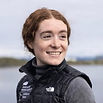
Sarah McElman
Lead Consultant, Metocean Expert Americas
Sarah McElman is a metocean analyst with a background in spectral wave modeling, computational fluid dynamics, and scale model testing. She is the former metocean lead for Avangrid Renewables and has experience in offshore site assessment for fixed and floating projects in the United States, Europe, and Asia. While at Avangrid, Sarah managed metocean buoy, FLiDAR, and other measurement campaigns across the US and Europe, in addition to leading the metocean dimensions of new business, development, and operational preparedness. She aims to bring theory into operational practices and bring operational experience into the classroom. Prior to joining Avangrid, Sarah was a computational modeler at Deltares and MARIN.
Guest Speakers:
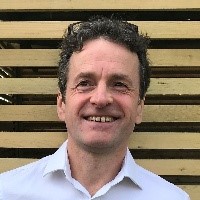
Jon Upton
Director and Metocean Engineer, Coastal and Ocean Surveys Limited
Jon has worked in contractor and operator environments, developing skills in metocean measurement delivery for 30 years. He deployed moorings in more than 20 countries, during his thirteen years at Fugro, working as an oceanographic engineer and party chief in addition to carrying out data QC and analysis. It was in the high risk, vessel-based environment that Jon developed a passion for safety culture. Working for Shell for almost 20 years, Jon was responsible for the strategy behind metocean campaigns for major projects, spending the last five years working specifically on offshore wind delivery, as metocean and site characterization lead. In late 2025, Jon left Shell and set up his own consultancy to continue supporting delivery of safe, high quality metocean campaigns.
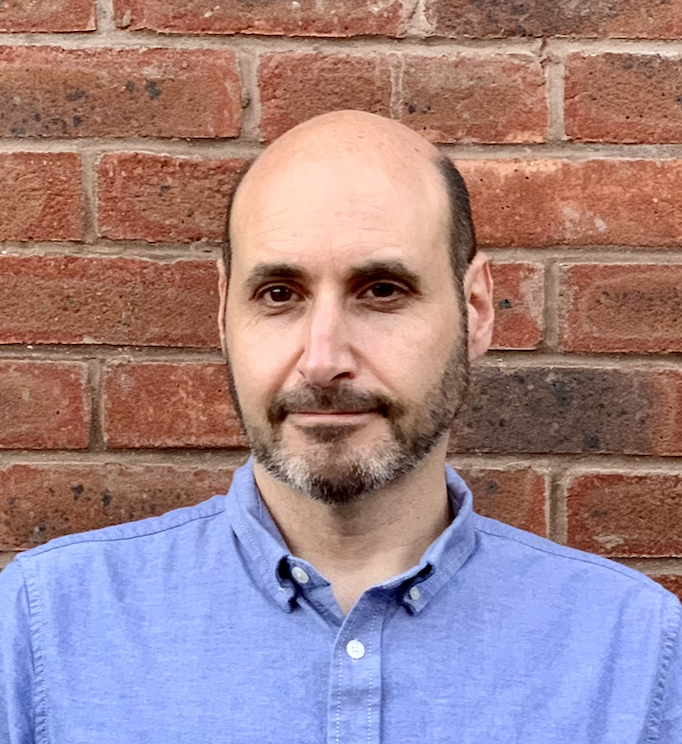
Stephen Redford
Principal Ice and Metocean Specialist at Metoceanology Limited.
Stephen brings 25 years’ experience supporting offshore energy projects worldwide, spanning arctic, temperate, and equatorial environments. He has worked both as a consultant and within several major energy developers, delivering ice and metocean design criteria, T&I programmes, and O&M optimisation strategies. He has extensive experience designing and coordinating ice, metocean, and wind monitoring programmes to address complex environmental hazards, as well as legislative and technical requirements.
Currently, Stephen supports offshore wind developers with metocean input from early-stage pre-bid evaluations through to engineering, operations, and decommissioning, across both fixed-bottom and floating wind projects. His work focuses on optimizing design and operational outcomes through robust data analytics and close engagement with engineers and certifiers. He is a Chartered Marine Scientist with the Institute of Marine Engineering, Science & Technology (IMarEST).
Panelists:

Chan K. Jeong
Senior Metocean & Weather Scientist at Woods Hole Group
Chan Jeong is a seasoned Metocean Engineer with expertise in weather data analysis, offshore wind development, and offshore structure transportation and installation (T&I). With a Ph.D. in Ocean Engineering from Texas A&M University, he has developed advanced weather data processing tools and forecasting models to enhance operational decision-making. His career spans roles at Shell, Fugro, and Boskalis, where he contributed to global offshore wind and oil & gas projects. Skilled in machine learning, numerical modeling, and risk management, Chan integrates cutting-edge technology into metocean and marine engineering consultancy.
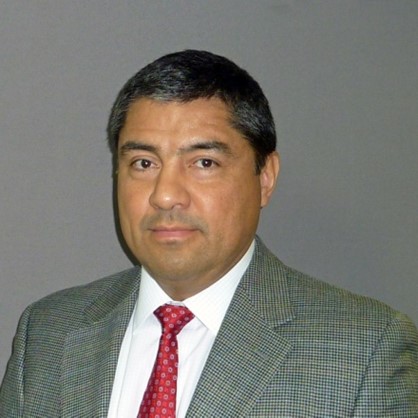
Rafael Ramos
Regional Manager – Senior Oceanographer at Woods Hole Group
Dr. Rafael Ramos has more than 35 years of experience working in many aspects of ocean engineering, oceanography, and atmospheric sciences for government entities, research institutions, and the offshore energy industry (Oil & Gas, Wind, and other renewables). He earned a Master’s Degree in Ocean Engineering from Texas A&M University and a Doctorate Degree in Applied Marine Physics at the University of Miami. He also completed a post-Doctorate appointment at the Center for Southeastern Tropical Advance Remote Sensing of the University of Miami. He has been involved in multiple aspects of design (and requalification) of offshore Oil & Gas and wind farm infrastructure and has participated in several studies related to the generation and implementation of associated operational, design, and structural assessment criteria, including the generation of recommended practices. Dr. Ramos has also been involved in several field experiments focused on further understanding atmospheric, oceanographic, and air-sea interaction phenomena, ranging from internal waves to momentum and heat transfer on the ocean surface. He is author or coauthor of more than 35 peer-reviewed technical articles and several conference proceedings papers dealing with modeling and interpretation of data collected by shore-based (HF radar), vessel-based (X-Band radar), and satellite-based (altimeter, scatterometer, SAR) remote sensing systems as well as moored (buoy) and non-moored instrumentation.
Dr. Ramos has participated in and led several meteorological and oceanographic (metocean) studies in basins around the world. He also works actively in the characterization of various ocean features using numerical models and metocean instrumentation including Turbulence Intensity. He is member of several technical organizations such as the American Society of Civil Engineers (COPRI Chapter), AGU, MTS, SNAME, SUT, and participates actively in scientific review committees and normativity development task groups in the US and abroad.
The course outline is subject to change and a detailed agenda will be shared after enrollment.
For all relevant student information on this course, such as the refund and cancellation, data protection policies, and more, please see the Student Info page below.